When envisioning the year 2050, I imagine a myriad of high-tech advancements such as flying cars, fully developed spaceships capable of carrying tourists, and highly sophisticated artificial intelligence. However, I realize I have overlooked an important aspect: the experience of those with physical disabilities. As someone with fully functional limbs, I often forget to consider the perspectives of individuals with physical impairments. Regardless of how advanced technology becomes, I believe that by 2050, we will not yet have reached the point where lost limbs can regenerate. Therefore, in my vision of 2050, there will be exceptionally perfect prosthetic technology that seamlessly fits and integrates with any person’s body who has a limb deficiency.
As someone with fully functional limbs, I can hardly imagine how challenging life must be for people with disabilities. It is estimated that today, 1.3 billion people—16% of the global population—live with significant disabilities. Due to the increase in non-communicable diseases and the longer life expectancy, this number continues to rise. People with disabilities are a diverse group, with factors such as gender, age, gender identity, sexual orientation, religion, race, ethnicity, and economic status influencing their life experiences and health needs. They experience poorer health, higher rates of early death, and more limitations in daily activities compared to others. Therefore, the invention of smart prosthetics brings a new way of life for amputees. These advanced prosthetics not only help amputees regain limb functionality, improving their quality of life and independence, but also promote their rehabilitation and psychological well-being. They facilitate easier integration into society and the workplace, restoring hope and confidence.
Therefore, by 2050, prosthetic technology is expected to undergo revolutionary advancements, completely transforming the quality of life and independence for people with disabilities. This article will discuss the development of prosthetic technology in three different stages according to Wendell Bell’s frameworks of possible futures, probable futures, and desirable futures.
Possible future
By 2050, intelligent prosthetics are expected to be a key focus of technological development. These prosthetics will be equipped with advanced sensors and microprocessors capable of mimicking the movement and sensation of natural limbs. These sensors will capture the user’s muscle and neural signals, which will be translated by the microprocessors into movement commands for the prosthetic, resulting in more natural and fluid motions. This way, users can use their prosthetics more flexibly to perform various daily activities and even delicate manual tasks, as if the prosthetics were their actual limbs(Image 1).
Moreover, prosthetics will directly connect to the user’s brain via neural interfaces, allowing users to control the prosthetics with their minds. By enhancing neural interface technology, prosthetics will be able to read and interpret commands from the user’s brain, executing precise and complex actions. This means that users can use prosthetics just like natural limbs, achieving greater autonomy and flexibility. Such technology will not only improve the functionality of prosthetics but also significantly enhance the users’ quality of life.
Additionally, 3D printing technology is another crucial development in prosthetic technology. Using 3D scanning technology, manufacturers can capture the user’s body structure and customize the prosthetic based on this data for each individual. 3D printing technology will make the production of prosthetics more flexible, allowing adjustments based on each customer’s unique needs to provide the most suitable prosthetic(Image 2).
Furthermore, personalized prosthetics will not only function better for the user but also closely resemble natural limbs in appearance. This kind of design will greatly enhance the user’s confidence and comfort, making the prosthetic feel like an integral part of their body rather than just a tool.
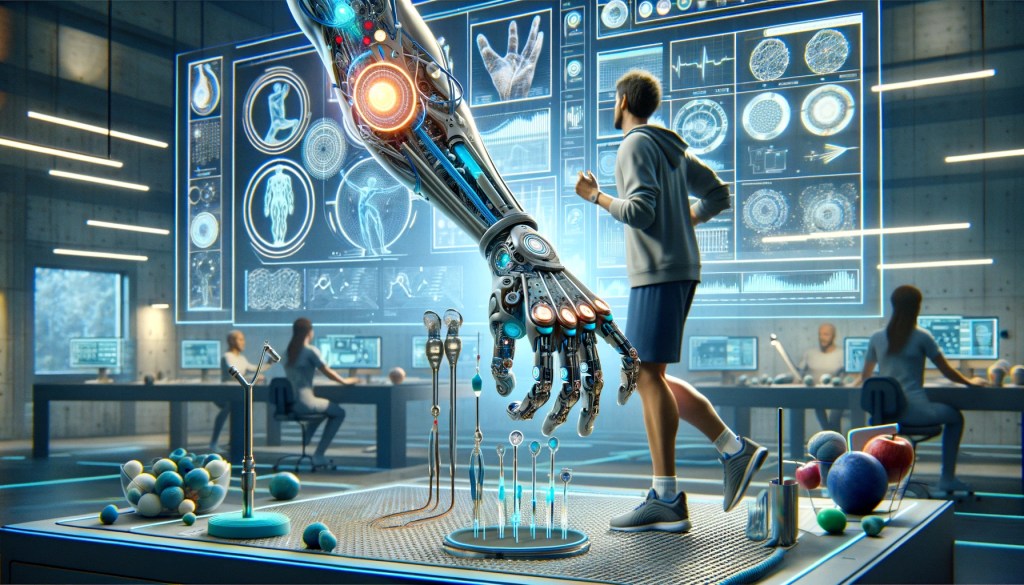
(Image 1)
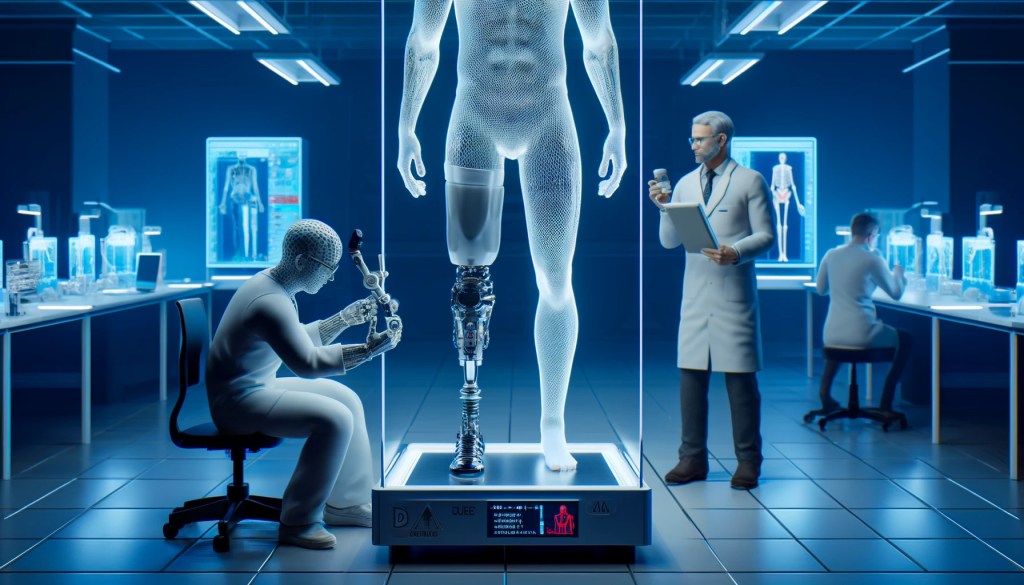
(Image 2)
Probable future
By 2050, prosthetics will be equipped with comprehensive sensory feedback systems, enabling users to sense temperature, pressure, and touch through their prosthetics. This feedback system will significantly enhance the practicality of prosthetics and improve the quality of life for users. The full sensory feedback system will utilize advanced sensors and neural interface technology to achieve real-time environmental perception. These sensors can capture information about temperature, pressure, and touch when the user interacts with objects and transmit this information to the user’s brain via neural interfaces, allowing the user to feel these sensations. For example, when a user picks up a cup of hot water with their prosthetic, the sensors on the prosthetic will detect the water’s temperature, enabling the user to feel the warmth of the water through the prosthetic(Image 3).
This feedback system can help users better control their prosthetics, preventing potential injuries due to a lack of sensation. Users will be able to judge the strength of their grip through tactile feedback, avoiding excessive or insufficient force. Additionally, temperature and pressure feedback will help users make more precise judgments when using their prosthetics, enhancing the practicality and safety of the devices.
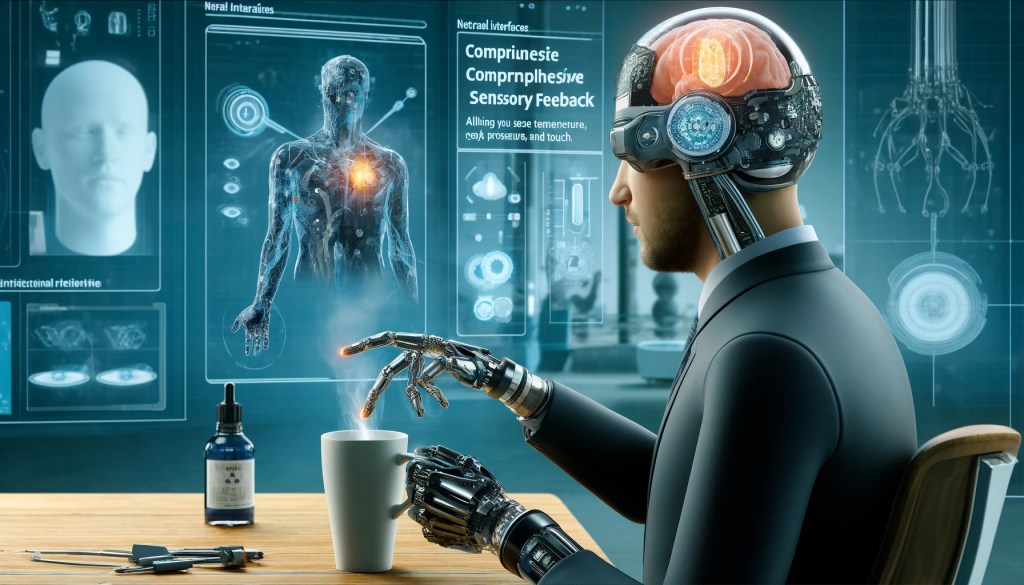
(Image 3)
Preferable future:
In the ideal future of 2050, prosthetics will not only seamlessly replace natural limbs in terms of functionality but also incorporate aesthetics and comfort. This design will eliminate users’ psychological barriers and social discrimination, allowing them to integrate into society with greater confidence and ease. The appearance of prosthetics will be nearly indistinguishable from natural limbs and can even be customized according to the user’s personal preferences, offering a variety of choices. Whether it’s color, material, or decoration, users can select based on their cultural background and aesthetic needs, making the prosthetic not just a functional device but also a part of their personal style and identity(Image 4).
Currently, I might imagine prosthetics that look like normal human limbs, but I believe that the society of 2050 will be more inclusive. Therefore, users with unique preferences might design their prosthetics to look different, such as resembling animal limbs while retaining the flexibility of human limbs. Additionally, by 2050, advancements will not be limited to technology; social welfare will also be significantly improved. As a result, prosthetic technology will become more widespread and affordable, ensuring that everyone, regardless of their economic status, can afford advanced prosthetics. Governments and social organizations will play a crucial role, providing the necessary support and resources to ensure that people with disabilities can equally benefit from technological advancements.
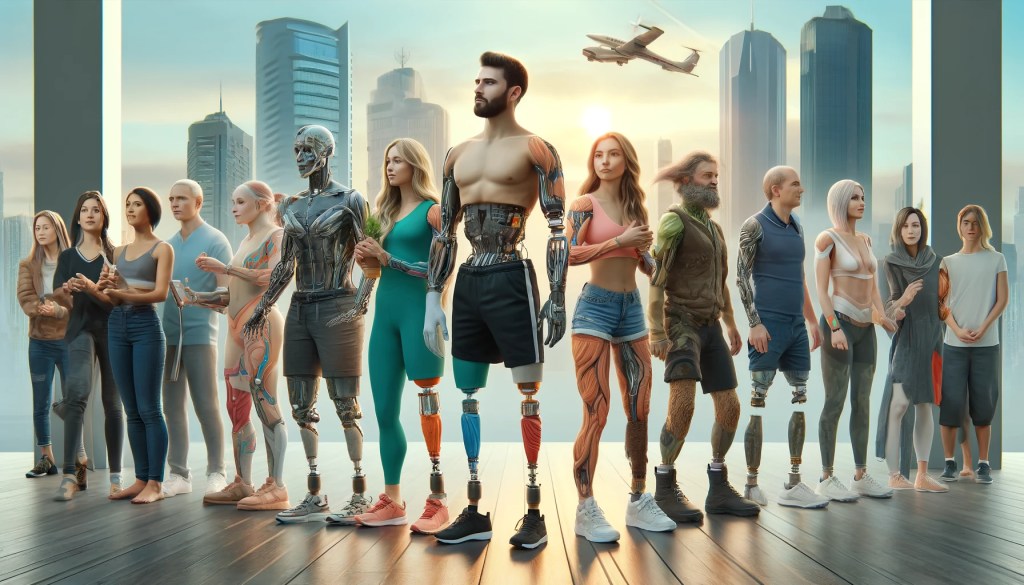
(Image 4)
In Conclusion
Based on Wendell Bell’s futurist framework, we focus on how intelligent prosthetic technology might develop by 2050, its probable development directions, and the desirable future we hope to achieve. By envisioning the future, I believe we will explore new advancements in prosthetic technology and build a better society where disabilities no longer impact individuals’ lives.
 Yining li